

Shop-Along Research That Reveals Purchase Decisions in Real Time
Shop-Along Research is a qualitative methodology in which researchers accompany consumers during their shopping journey to understand how purchase decisions are made in real time.
Instead of relying only on recalled shopping experiences, shop-along studies allow researchers to observe how consumers navigate stores, notice products, compare alternatives, react to pricing and promotions, interact with packaging, and ultimately decide what to purchase.
Census Market Research conducts shop-along studies across supermarkets, retail outlets, shopping malls, pharmacies, automotive showrooms and specialty stores, providing contextual insight into the factors influencing shopper behaviour and customer experience.
Observe the decision while it is actually happening.
Shopping decisions can be influenced by dozens of small factors. Real-time observation helps reveal what attracts attention, what creates hesitation and what ultimately drives product or brand selection.
Understanding Why Shoppers Choose One Product Over Another
Consumers may not always remember every factor that influenced a purchase. Shop-along research captures behaviour within the retail environment, allowing researchers to understand how product visibility, packaging, price, promotions and store conditions influence decisions.
Follow the Purchase Journey
Researchers can accompany shoppers from initial store navigation through product discovery, evaluation, comparison and final selection. Contextual questioning helps explain the motivations behind each stage of the decision.
Purchase Drivers
Explore the role of brand familiarity, price, packaging, product claims, promotions and previous experience in purchase decisions.
Product Visibility
Understand which products attract attention and how shelf position, merchandising and visual presentation influence consideration.
Competitive Comparison
Observe how shoppers compare competing brands, pack sizes, features, prices and promotional offers before making a decision.
Retail Experience
Identify store-level barriers, moments of confusion and opportunities to improve navigation, merchandising and the overall shopping experience.
What We Explore During Shop-Along Research
Shop-alongs combine observation with contextual discussion so researchers can connect what shoppers do with the reasons behind their actions and decisions.
Store Navigation
Understand how shoppers move through the environment, locate categories and respond to store layout and signage.
Product Discovery
Observe what catches attention first and which products or brands enter the consideration set.
Product Interaction
Explore how shoppers examine packaging, labels, product information, features and physical presentation.
Pricing Sensitivity
Understand how price points, discounts and promotional offers influence comparison and final selection.
Brand Consideration
Explore the impact of familiarity, trust, previous usage and brand perception on shopper decisions.
Merchandising
Evaluate shelf placement, displays, point-of-sale materials and other merchandising influences.
Contextual Interviews
Combine observation with in-depth qualitative questioning to understand the reasoning behind observed decisions.
Final Purchase Decision
Identify which factors ultimately determine whether a product is purchased, rejected or replaced by an alternative.
How Shop-Along Research Supports Better Retail Decisions
Shop-alongs are closely connected to ethnographic research because both methodologies focus on understanding behaviour within the environment where it naturally occurs.
For retail and shopper studies, this approach helps organisations understand the entire decision process rather than only the final purchase outcome.
Shop-along research can also complement broader retail and e-commerce market research where shopper behaviour and customer experience are important research objectives.
Understand Actual Shopping Behaviour
See how shoppers behave within real retail environments instead of relying only on recall.
Identify Purchase Drivers
Understand the combination of product, price, brand, promotion and environmental factors influencing choice.
Improve Merchandising
Identify opportunities to strengthen shelf visibility, product presentation and promotional communication.
Optimize Product Placement
Understand how placement affects product discovery, consideration and purchase.
Support Category Management
Use shopper evidence to improve category organisation, product assortment and the overall retail experience.
Understand the purchase decision where it actually happens.
Shop-along research connects real-time observation with shopper explanation to reveal how retail environments, brands, products and promotions influence purchase behaviour.
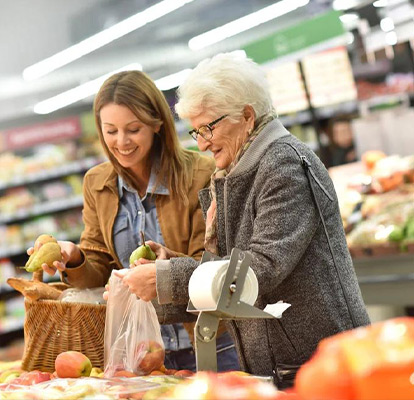
Our Shop-Along Research Process
Shop-along research requires careful coordination so that the shopping experience remains natural while researchers capture the behaviours, decisions and contextual factors relevant to the study.
Shopper Recruitment
Participants are recruited according to agreed demographic, behavioural, category usage, purchase frequency or shopper-profile criteria.
Research Briefing
The research team aligns on objectives, target behaviours, observation priorities, store environments and discussion areas before fieldwork begins.
Accompanied Shopping Session
The researcher accompanies the participant through the shopping journey while allowing decisions and interactions to unfold as naturally as possible.
Observation & Interviewing
Shopper actions are observed and supported by contextual questioning to understand the reasons behind product consideration, comparison and purchase decisions.
Data Documentation
Relevant observations, shopper comments and behavioural moments are documented according to the agreed research design and study requirements.
Analysis & Interpretation
Findings are reviewed to identify recurring purchase drivers, barriers, decision patterns and environmental influences across participants.
Strategic Recommendations
Insights can be translated into practical recommendations for merchandising, product placement, category strategy, customer experience and marketing.
Observation Combined With Real-Time Shopper Explanation
Shop-along studies are most valuable when researchers can connect visible behaviour with the shopper's own explanation of what influenced each decision.
The methodology can be combined with in-depth interviews or broader ethnographic research when additional contextual understanding is required.
Naturalistic Observation
Observe how shoppers navigate, browse, compare and interact with products within a real retail environment.
Contextual Probing
Ask focused questions at relevant moments to understand why a shopper noticed, considered, rejected or selected a particular option.
Post-Shop Reflection
Review the completed shopping journey with the participant to explore key decisions, unmet needs and overall retail experience.
Industries Served Through Shop-Along Research
Shop-along studies are particularly valuable in sectors where product visibility, comparison, store environment and real-time customer decisions influence purchasing behaviour.
Retail & E-Commerce
Shopper journeys, store navigation, category exploration, merchandising and overall retail experience.
FMCG
Brand choice, shelf visibility, packaging, promotions, category behaviour and product comparison.
Consumer Electronics
Product comparison, feature evaluation, demonstration behaviour and purchase decision-making.
Healthcare & Pharma
Shopper experiences within pharmacies and relevant healthcare retail environments.
Luxury Goods
Brand perception, service expectations, product engagement and high-consideration purchase behaviour.
Automotive
Showroom journeys, model consideration, feature comparison and interactions during vehicle purchase exploration.
Home Improvement
Product evaluation, category navigation, specification comparison and purchase planning.
Beauty & Personal Care
Product discovery, packaging interaction, brand switching and promotion-driven behaviour.
Specialty Retail
Detailed observation of category-specific shopper journeys and high-involvement product decisions.
Capturing Natural Shopper Behaviour
The quality of a shop-along study depends on observing genuine behaviour without turning the shopping journey into an artificial research exercise.
Researchers therefore need to balance observation and questioning carefully, probing important moments while allowing the shopper to continue making decisions as naturally as possible.
Shop-along research can also complement mystery shopping services when an organisation wants to understand both the shopper perspective and the consistency of the retail experience.
Why Census Market Research?
Frequently Asked Questions About Shop-Along Research
Common questions about observing consumers during real shopping journeys.
What is shop-along research?
Shop-along research is a qualitative methodology where a researcher accompanies a consumer during a shopping journey to observe behaviour and explore purchase decisions in real time.
How is a shop-along different from a normal interview?
A conventional interview relies mainly on remembered experiences. A shop-along allows researchers to observe shopping behaviour as decisions actually occur.
What can be evaluated during a shop-along?
Studies can explore store navigation, product visibility, packaging, pricing, promotions, brand consideration, comparison behaviour and final purchase decisions.
Where can shop-along research be conducted?
Shop-alongs can be conducted in supermarkets, retail stores, shopping malls, pharmacies, automotive showrooms, specialty stores and other relevant shopping environments.
Can shop-along research support merchandising decisions?
Yes. Observing how shoppers notice and interact with products can provide useful insight into shelf visibility, placement, displays and promotional communication.
Can shop-alongs be combined with other methodologies?
Yes. They can be combined with ethnographic research, in-depth interviews, surveys and other qualitative or quantitative approaches depending on the research objective.
Every shelf interaction can reveal something about the purchase decision.
Shop-along research helps organisations understand the relationship between shopper behaviour, retail environment, product presentation and final purchase choice.
