

Home Visit Research That Reveals How Consumers Live, Use and Decide
Home Visit Research is a qualitative methodology that allows researchers to understand consumers within their natural living environment. By observing respondents at home, researchers can explore how products, services and everyday decisions fit into real household routines.
Rather than relying only on what consumers remember or report, home visits provide direct visibility into product usage, household behaviours, purchasing decisions, lifestyle patterns and family interactions.
Census Market Research conducts structured home-based qualitative studies designed to uncover behaviours, unmet needs and contextual factors that may be difficult to identify through surveys or group discussions alone.
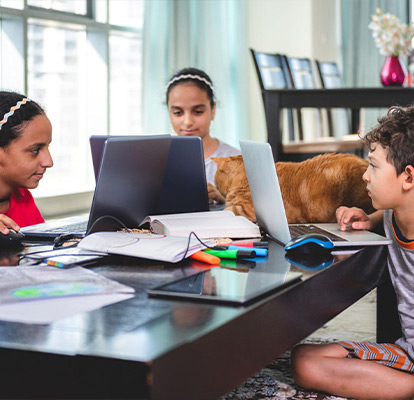
See how products fit into consumers' everyday lives.
Observing consumers within their own environment can reveal usage habits, adaptations, frustrations and decision-making factors that may never emerge from a conventional research setting.
Why Conduct Research Inside the Consumer's Home?
Consumers do not experience products in isolation. Their behaviour is influenced by their environment, household routines, family members, available space, competing products and established habits. Home visits allow these influences to be understood in context.
See Real Product Usage
Researchers can observe how consumers actually store, prepare, use, maintain and interact with products in everyday life. This provides a more realistic view than relying only on recalled experiences or stated behaviour.
Household Dynamics
Understand how family members, shared responsibilities and household routines influence product usage, preferences and purchasing decisions.
Environmental Influence
Explore how storage, space, equipment, accessibility and the surrounding home environment affect customer experiences and behaviour.
Unmet Consumer Needs
Identify frustrations, adaptations and workarounds that consumers may not consciously mention during a conventional interview.
Product Opportunities
Translate observed behaviours into opportunities for product improvement, packaging development, service enhancement and customer-centred innovation.
What We Explore During Home Visits
Each study is designed around the research objective. Observation can be combined with contextual questioning, product demonstrations and other qualitative techniques to understand not only what consumers do, but why they do it.
Product Usage
How consumers use, prepare, store, maintain or interact with products within their everyday environment.
Household Routines
Daily and weekly routines that influence consumption, product choice and service usage.
Purchasing Behaviour
The factors influencing what is purchased, why particular brands or products are selected and how household needs shape decisions.
Family Dynamics
How different household members influence product use, preferences, decision-making and consumption.
Lifestyle Behaviour
Habits, routines, priorities and contextual influences surrounding everyday consumer behaviour.
Product Demonstrations
Participants can demonstrate how they currently use a product or complete relevant tasks within their natural environment.
Contextual Interviews
Researchers can combine observation with in-depth interviewing to understand the reasoning behind observed actions.
Visual Documentation
Where appropriate and subject to respondent consent, photography or video can help document relevant product, environment and usage observations.
What Home Visit Research Can Reveal
Home visits are closely related to ethnographic research because both approaches focus on understanding behaviour within the environment where it naturally occurs.
The methodology can be particularly useful for studies involving household products, food and beverages, technology, healthcare experiences, appliances and lifestyle behaviour.
Home visits can also complement other qualitative research methodologies when additional contextual understanding is required.
Understand Real-Life Product Usage
Observe how products are actually incorporated into everyday household routines.
Identify Unmet Consumer Needs
Discover frustrations, barriers and needs that may not emerge through direct questioning alone.
Understand Household Dynamics
Explore how household members and routines influence product choice and consumption behaviour.
Improve Product Development
Use real-world observations to improve functionality, packaging, usability and overall product experience.
Support Customer-Centred Innovation
Translate consumer behaviour and unmet needs into practical opportunities for new products and services.
Understand consumers where everyday behaviour actually happens.
Home visit research connects observation, conversation and context to provide a deeper understanding of how products and services fit into consumers' lives.
Our Home Visit Research Process
Home visit research requires careful planning because the study takes place within the respondent's personal environment. Each stage is structured to ensure the right participants, appropriate observation activities and a respectful research experience.
Recruitment & Screening
Participants are recruited according to agreed demographic, behavioural, household, category usage or product ownership criteria.
Visit Planning
The research team coordinates timing, location, respondent availability and the activities to be covered during the home visit.
Home Observation
Researchers observe relevant routines, product usage, household interactions and environmental factors within the respondent's natural living environment.
Contextual Interviews
Observation is supported by one-to-one discussion to understand why particular behaviours, routines and decisions occur.
Product Evaluation
Where relevant, participants can demonstrate how they use, prepare, store or interact with specific products in the home.
Insight Analysis
Observations and respondent feedback are reviewed to identify recurring behaviours, unmet needs, pain points and contextual influences.
Reporting & Recommendations
Findings can be translated into practical insights for product development, customer experience, innovation and strategic decision-making.
More Than Observation Alone
Home visit research can combine several qualitative techniques to understand both visible behaviour and the reasons behind it.
Depending on the study, home visits may be integrated with ethnographic research , in-depth interviewing and participant-led activities.
Structured Observation
Researchers observe relevant routines, product usage, household interactions and environmental influences.
Contextual Discussion
Participants explain the motivations and decisions behind observed behaviours through guided qualitative discussion.
Product Demonstration
Respondents can demonstrate how products are used, stored, prepared or incorporated into everyday household routines.
Industries Served Through Home Visit Research
Home-based qualitative research is especially valuable in categories where product usage, lifestyle behaviour and the household environment directly influence the customer experience.
FMCG
Understand consumption routines, product storage, household usage and category behaviour.
Healthcare & Pharma
Explore relevant patient experiences, treatment routines, product usage and healthcare-related behaviours in context.
Consumer Electronics
Observe how devices are used, configured and integrated into everyday household routines.
Home Appliances
Evaluate product usage, maintenance behaviour, usability and real-world household interaction.
Food & Beverage
Explore preparation, consumption, storage, brand choice and household eating or drinking routines.
Personal Care
Understand grooming routines, product combinations, frequency of usage and consumer needs.
Retail & E-Commerce
Connect purchase decisions with how products are later used, stored and experienced within the home.
Technology & IT
Explore digital behaviour, connected devices, technology adoption and usage in the household environment.
Consumer Lifestyle
Understand routines, preferences, household dynamics and the broader context surrounding everyday choices.
Research Quality, Privacy and Respondent Comfort
Home visits take place within a personal environment, so respondent comfort and clear research procedures are particularly important.
The scope of observation, interview activities and any photography or video documentation should be agreed according to the study requirements and respondent consent.
Home visits can also be combined with in-depth interviews and consumer diaries when a project requires additional behavioural or longitudinal insight.
Why Census Market Research?
Frequently Asked Questions About Home Visit Research
Common questions about conducting qualitative research within consumers' natural home environments.
What is home visit research?
Home visit research is a qualitative methodology in which researchers meet respondents in their homes to observe behaviours, routines and product usage while also conducting contextual discussion.
What can researchers observe during a home visit?
Depending on the project, researchers may explore product usage, storage, preparation, household routines, family interactions, lifestyle behaviour and relevant environmental factors.
How is a home visit different from a normal interview?
A conventional interview mainly relies on respondent explanation. A home visit also provides contextual observation of behaviour within the environment where everyday activities actually occur.
Can home visit research include product demonstrations?
Yes. Where appropriate, participants can demonstrate how they currently use, prepare, store or interact with a product during the visit.
Can photography or video be used during home visits?
Where relevant to the study and subject to respondent consent, photography or video documentation can be used to support observational research.
What types of studies benefit from home visits?
Home visits are useful for FMCG, healthcare, appliances, consumer electronics, food and beverage, personal care, technology and lifestyle research where real-world usage context is important.
The home environment can reveal details that research facilities cannot replicate.
Home visit research helps organisations understand how products, household routines and real-life context combine to shape customer behaviour and experience.
